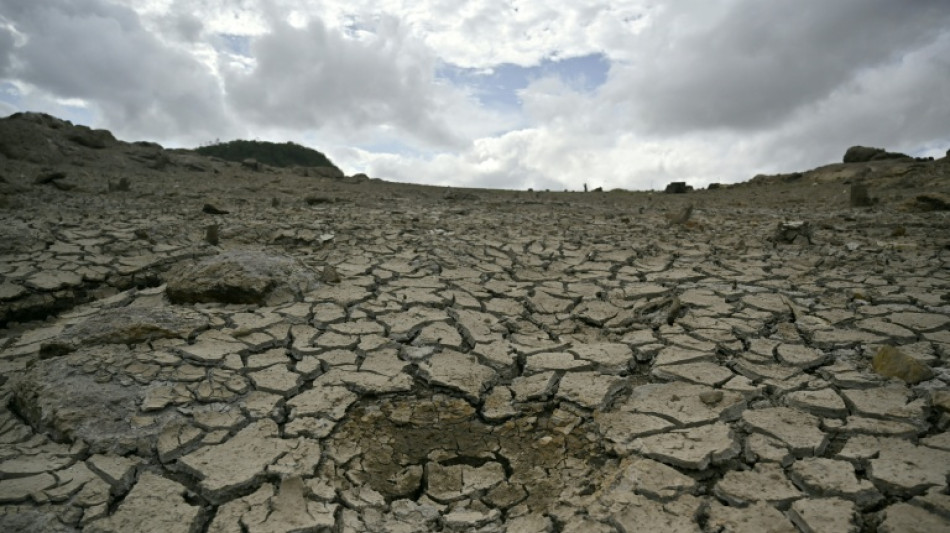
Honduras places 80% of country on El Nino drought alert / Photo: Orlando SIERRA - AFP
The Honduran government on Wednesday placed 80 percent of the country, including the capital, on drought alert as El Nino scorches harvests and causes livestock to die of thirst.
The El Nino weather pattern warms surface temperatures in the central and eastern equatorial Pacific Ocean, triggering worldwide changes in winds, atmospheric pressure and rainfall patterns, and causing warmer overall global temperatures.
This year's El Nino is forecast to be one of the strongest on record.
The measures taken by the Honduran government covers 234 municipalities (out of a total of 298) that have been affected by low reservoir levels, crop losses, and livestock deaths, threatening food security.
"Cattle have died, and the cows we still have are thin. The situation is critical; the forecasts are discouraging," Francisco Euceda, a cattle rancher from one of the municipalities under red alert, told AFP.
Tegucigalpa, the capital city with 1.7 million inhabitants, tops the list of 75 areas placed under red alert, meaning they are at maximum risk.
The most affected area is the Central American Dry Corridor, an arid strip of land covering parts of Honduras, El Salvador, and Nicaragua, that is vulnerable to extreme weather events.
"This crisis will last until March or April of next year," said Honduran President Nasry Asfura, announcing a series of emergency measures, including the drilling of new wells, construction of new reservoirs and delivery of food to the most critical areas.
The UN World Food Programme recently estimated that Central America would be the region worse affected by hunger exacerbated by El Nino.
From Mexico to northern Brazil, including the Pacific coast and the Guiana Shield on the north coast of South America, some 110 million people experienced the hottest July on record.
El Salvador, Nicaragua, and Honduras broke their monthly temperature records in both June and July, exacerbating fears of famine.
Last month, UN Secretary-General Antonio Guterres warned that El Nino was "adding fuel to a planet already on fire" and pushing the world into "uncharted territory."
Peru last week declared a state of emergency in a third of its cities over El Nino and said intense heat and rain could also cause havoc for food production.
In Indonesia, meanwhile, El Nino has been blamed for worsening a drought that has fueled one of the worst wildfire season in years.
T.Karagounis--AN-GR