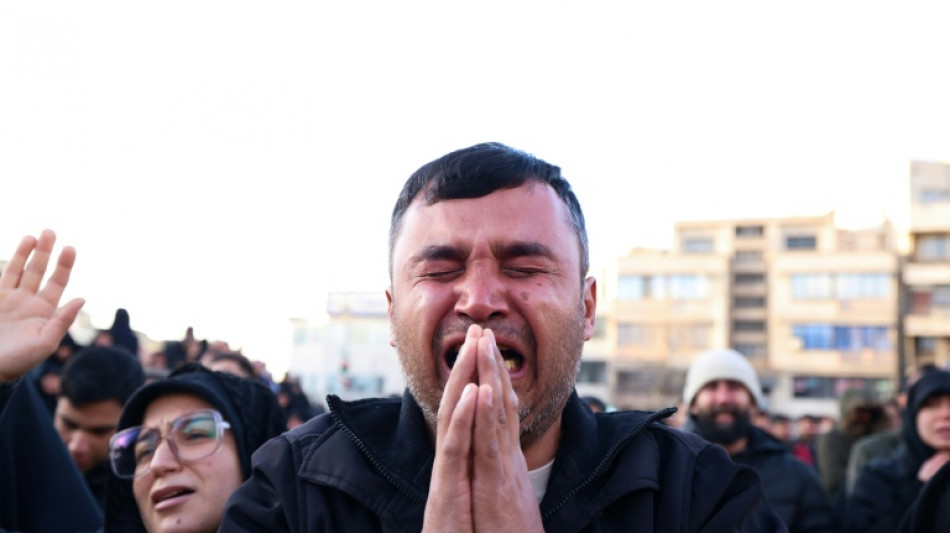
Latest developments after US, Israeli strikes kill Iran's Khamenei / Photo: Atta KENARE - AFP
Iranian state television confirmed the death of Iran's supreme leader Ayatollah Ali Khamenei on Sunday, after US President Donald Trump said he had been killed.
The announcement came after the United States and Israel started launching waves of strikes Saturday against targets in Iran, sparking swift retaliation by the Islamic republic.
Here are the latest developments.
- Iran hits back -
Iran's army said it targeted on Sunday US bases in Iraq's Kurdistan region and in the Gulf in response to Israeli and US strikes that killed supreme leader Ayatollah Ali Khamenei.
"A few minutes ago, pilots of the air forces of the Islamic Republic of Iran successfully bombed US bases in the countries of the Persian Gulf and in the Kurdistan region of Iraq over several phases of operations," Iran's army said in a statement carried by state TV.
Air raid sirens sounded and explosions were heard over Jerusalem on Sunday after the Israeli military said it had detected missiles launched from Iran towards Israel.
AFP reporters also heard fresh blasts in Dubai, Bahrain's capital Manama and Qatar -- where AFP correspondents saw thick black smoke rising on the clear morning horizon in the south of Doha.
Shortly after, another wave of blasts reverberated through Dubai.
- Deadly protests erupt -
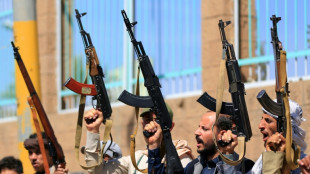
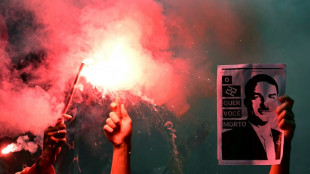
Crowds gathered on Sunday in Iran's south to call for vengeance following the killing of Khamenei in US and Israeli attacks, Iranian media reported.
Similar gatherings took place elsewhere in Iran including in Tehran and the central city of Yazd.
Hundreds of protesters in Iraq, which officially declared three days of mourning for Khamenei, also tried to storm the fortified Green Zone in Baghdad, where the US embassy is located.
In Pakistan, eight people were killed as hundreds of protesters tried to storm the US consulate in the megacity of Karachi, the local rescue service said.
Several thousand Shia Muslims joined demonstrations in Indian-administered Kashmir, many chanting anti-Israel and anti-US slogans.
The US embassy in Oman told its staff and citizen to take cover due to "activity outside Muscat", though it was not immediately clear what that activity was.
- Evacuations -
Thailand is readying to evacuate its citizens from the Middle East by military or charter flights, Prime Minister Anutin Charnvirakul said Sunday.
The Thai government has "coordinated with the Royal Thai Air Force to prepare aircraft to evacuate Thai citizens, prioritising those in Iran", Anutin told reporters in Bangkok, adding that charter flights were also under consideration.
"We have to check the closure of airspace, whether we need to evacuate them to the third country first," he added.
- UN nuclear agency to meet -
The United Nations' nuclear agency will hold an extraordinary meeting on Iran on Monday in the wake of the US-Israeli strikes on the Islamic republic, aimed in part at Tehran's atomic programme.
In a statement late on Saturday, the Vienna-based International Atomic Energy Agency (IAEA) said the meeting was at the request of Russia, a key ally of Tehran.
- More deaths announced -
Iran's armed forces chief of staff Abdolrahim Mousavi was killed along with other senior generals in US and Israeli strikes on the country, state TV reported on Sunday.
State TV listed the name of Mousavi along with defence minister Aziz Nasirzadeh and others.
- Iran leader killed -
Iranian state television reported Khamenei's death in the early hours of Sunday, broadcasting archive images with a black banner.
Iranian media also reported the deaths of his daughter, son-in-law and granddaughter.
"Khamenei, one of the most evil people in History, is dead," Trump had said hours earlier on his Truth Social platform.
"Heavy and pinpoint bombing... will continue, uninterrupted throughout the week or, as long as necessary to achieve our objective of PEACE THROUGHOUT THE MIDDLE EAST," Trump wrote.
He later warned Iran of force "never been seen before" after he said the Islamic republic indicated it was going to strike back "harder than they have ever hit."
Pentagon chief Pete Hegseth said the campaign sent a message to those who would do harm to Americans: "We will hunt you down and we will kill you."
- New blasts in Tehran -
A new series of powerful blasts were heard Sunday in Tehran, AFP journalists in the Iranian capital reported. The source of the blasts was not immediately clear.
Iranian state television announced a 40-day mourning period and seven public holidays following the ayatollah's death.
- Guards chief killed -
Iran's judiciary confirmed Sunday that the chief of the Revolutionary Guards, General Mohammad Pakpour, and another top security adviser, Ali Shamkhani, were also "martyred" in the strikes.
Earlier Sunday, the Guards said they would launch the "most ferocious" operation in history against Israel and US military bases.
Iranian President Masoud Pezeshkian and two other top officials will lead the country in a transitional period following the death of Khamenei, state television reported.
- 'Threats' -
The joint US-Israeli operation began on Saturday with smoke rising over Tehran after strikes that Israel said were pre-emptive.
Shortly after, Trump announced US combat operations, with the goal of "eliminating imminent threats".
Israel's military said it targeted multiple sites where senior Iranian officials had gathered in Tehran, and launched strikes against Iranian missile launchers.
It said 200 fighter jets had taken part in the "extensive attack", hitting more than 500 targets.
The Iranian judiciary said 108 people died in a strike on a girls' school in Minab, citing a provincial official who blamed Israel.
AFP was unable to access the location to verify the toll or the circumstances surrounding the incident.
- Missile, drone wave -
In response to the US and Israeli attacks, Iran's Revolutionary Guards said they targeted the US Fifth Fleet in Bahrain and other American bases in the Gulf on Saturday, after launching a first wave of missile and drone attacks at Israel.
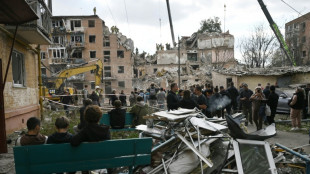
Israel's Magen David Adom emergency service said a woman was killed and at least 21 were injured in the Tel Aviv area.
The Israeli military said it deployed search and rescue teams to multiple locations across the country following reports of fallen projectiles.
- Gulf explosions, strait closed -
Explosions had been reported across the Gulf region a day earlier following the strikes.
The United Arab Emirates said that two people were killed in Abu Dhabi, including a Pakistani civilian.
The country's defence ministry said that 137 missiles and 209 drones were fired at its territory.
Witnesses in Dubai said they heard an explosion and saw missiles streak across the sky. Others told AFP they heard an explosion and saw smoke rising from man-made island The Palm. Four people were injured.
AFP correspondents heard loud explosions in the Saudi capital Riyadh.
Qatar's defence ministry said it had intercepted several missile attacks targeting the Gulf state.
Two people were killed in air strikes on an Iraqi military base housing the powerful pro-Iran group Kataeb Hezbollah, which threatened the US with a response.
Iran's Revolutionary Guards also moved to close the Strait of Hormuz, a vital waterway through which much of the world's oil and gas passes.
- UN Security Council meets -
The United Nations Security Council held an emergency meeting over the fighting, with Iran's envoy accusing the US and Israel of committing a possible "war crime" by attacking civilians.
UN chief Antonio Guterres said military action in the Middle East "carries the risk of igniting a chain of events that no one can control".
- Airspace closures, flights nixed -
Iran, Iraq, Kuwait, Syria, the UAE and Israel all closed their airspaces to civilian traffic, at least in part, and multiple airlines cancelled flights to the Middle East.
burs-st/sbk
M.Papanikolaou--AN-GR