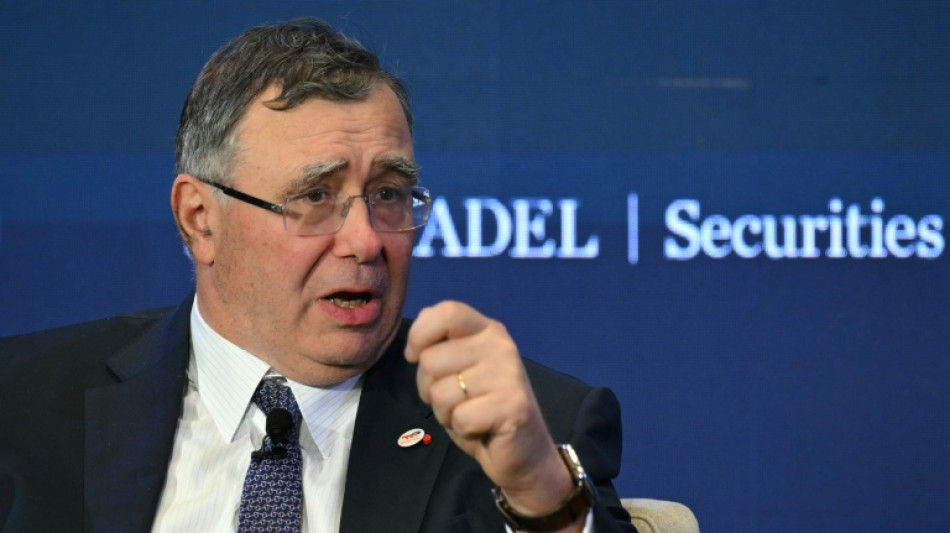
Hormuz toll preferable to closure, TotalEnergies CEO says / Photo: Mandel NGAN - AFP
The head of the French energy giant TotalEnergies said Monday that reopening the Strait of Hormuz -- even with a toll -- was critical for global markets.
"It's clear that reopening and the free circulation through the Strait of Hormuz, even if you have to pay to anybody, is fundamental for the freedom of markets and global markets," Patrick Pouyanne, the company's CEO, said at an event on the sidelines of the IMF and World Bank spring meetings in Washington.
Since the start of the war in the Middle East on February 28, shipping across the strait -- through which some 20 percent of the world's oil and gas is transported -- has been largely paralyzed.
On Monday, US President Donald Trump further ordered a naval blockade of Iranian ports -- another obstacle for passage through the strait.
This move will add a "layer of less liquidity in the market," Pouyanne said at the Semafor World Economy Conference.
The energy CEO said that Western countries had largely been buffered from the worst economic effects of the war through their stockpiles of oil and gas.
He warned, however, that "if this war and this blockade last more than three months, we'll begin to face some serious supply issues," notably in jet fuel and diesel.
He also pointed to fertilizer -- derived from petroleum products -- being "almost a system risk," as shortages could lead to higher food prices and thus inflation.
Pouyanne noted that fees are paid by ships transiting the Panama and Suez canals.
"The real problem is the threat" of sudden closure of the Strait of Hormuz, he said, explaining that the uncertainty will drive up prices.
R.Zachariou--AN-GR