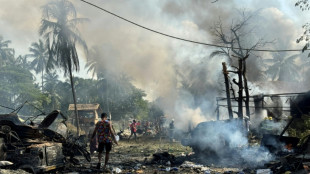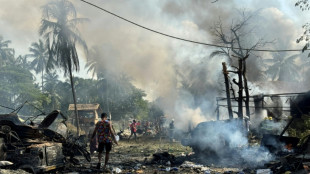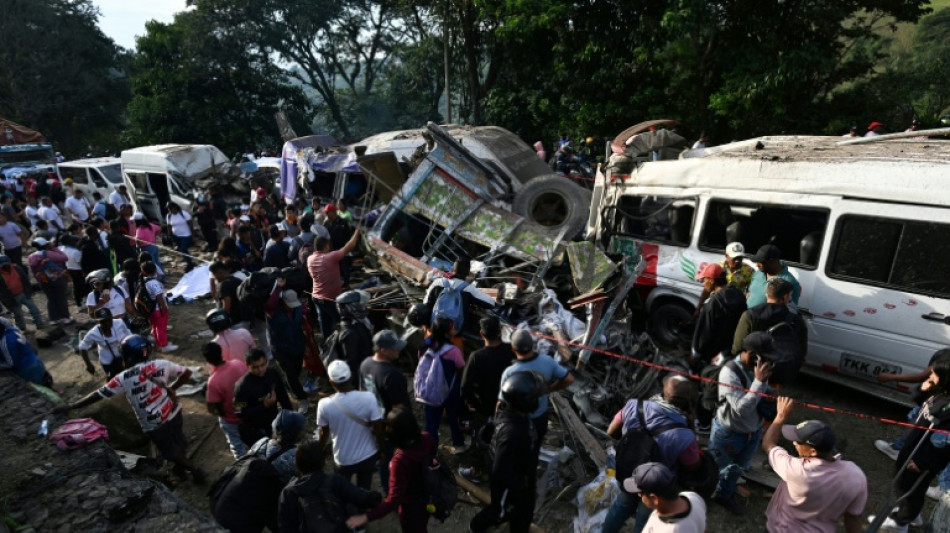
21 killed in deadliest Colombia bombing in decades / Photo: JOAQUIN SARMIENTO - AFP
The death toll in a Colombian highway bombing blamed on cocaine-trafficking rebels has risen to 21, the government said Monday, in the country's worst attack on civilians in decades and just ahead of elections.
Saturday's bombing in the southwestern Cauca department -- which the government blamed on guerrillas opposed to a decade-old peace process -- comes one month before Colombia holds presidential elections on May 31.
At least 31 guerrilla attacks were recorded in the southwest over the weekend, a military spokesman told AFP, marking a major uptick in violence ahead of the vote.
Defense Minister Pedro Sanchez told Caracol Radio that 21 people were killed and 56 injured in Saturday's blast on a major highway.
Insecurity is a major theme in the race to pick a successor to Colombia's first left-wing president, Gustavo Petro.
Right-wing candidates are vowing to crack down hard on the drug-smuggling guerrillas with whom Petro launched failed peace talks.
Under pressure from the United States, Petro has stepped up military action against the guerrillas in recent months.
He blamed Saturday's bombing on Ivan Mordisco, the South American country's most-wanted criminal, whom the president has compared to late cocaine kingpin Pablo Escobar.
Mordisco heads a breakaway faction of the the defunct Revolutionary Armed Forces of Colombia (FARC) rebel army, which agreed to lay down arms in 2016.
The attack on Saturday was the deadliest against civilians since 2003, when FARC blew up a Bogota nightclub, killing nearly 40 people.
At least 15 women were among the victims of the Cauca blast, which left a massive crater on the road connecting the cities of Cali and Popayan.
- Destabilization strategy -
Military chief Hugo Lopez said the bomb exploded after assailants stopped traffic by blocking the road with a bus and another vehicle.
Several cars were flipped over by the force of the explosion.
Sanchez, the defense minister, told Blu Radio that the "terrorism wave" was a response to military operations against rebels in the area, whom he accused of "war crimes."
Laura Bonilla, deputy director of the Peace and Reconciliation Foundation, said the attacks were an attempt by Mordisco's group to gain leverage in negotiations with local communities.
Under that scenario, she said, the rebels would "reduce levels of violence in exchange for fewer police operations" and drug seizures.
Cauca is one of the main areas for the cultivation of coca, the key ingredient in cocaine, of which Colombia is the world's biggest producer.
Cocaine production and trafficking is the main income source of the country's armed groups.
Petro, who is barred by the constitution from seeking a second consecutive term, has labeled the rebels "terrorists" and ordered the security forces to intensify their offensive against them.
Right-wing candidate Paloma Valencia, a native of Cauca, accused the president of being responsible for the bloodshed.
"This government has allowed violence to grow," she accused.
Valencia and fellow right-winger Abelardo de la Espriella are trailing leftist senator Ivan Cepeda in opinion polls.
The campaign has seen a surge in political violence.
Last year, a young conservative candidate, Miguel Uribe Turbay, was shot in broad daylight while campaigning at a park in Bogota.
He died two months later.
G.Karamanlis--AN-GR