Iran, US trade blows as Middle East peace deal draws no nearer
Iran attacked US bases in Jordan and Bahrain on Wednesday, the latest salvo in tit-for-tat strikes with the United States after the downing of a US helicopter over the Strait of Hormuz.
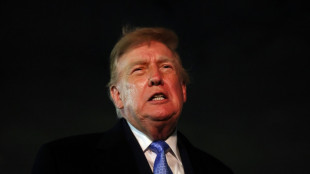
The worst bout of fighting between Washington and Tehran since their April 8 ceasefire has cast further doubt on US President Donald Trump's earlier claim that negotiations were in their "final throes" before reaching an enduring settlement to end the Middle East war.
The fresh Iranian strikes came after the United States carried out its own attacks on the Islamic republic in response to Tehran shooting down an American helicopter.
Iranian forces fired "long-range missiles" and "targeted and destroyed four major targets" in Jordan, including F35 fighter nests at an air base and the US command centre in Al-Azraq, the country's Revolutionary Guards said in a statement quoted by state-run IRNA news agency early on Wednesday.
Jordan's military said it shot down five missiles from Iran, with no casualties or material damage.
The hostilities extended to other countries in the Middle East, with air raid sirens sounding in Bahrain after the Guards said they had struck another US base there.
The Kuwaiti military said its air defences were engaging "hostile aerial targets", without immediately mentioning the aggressor, though Iran has recently carried out deadly attacks on the US ally.
The incidents came after the US military said it had "completed" what Trump portrayed as a retaliatory assault on Iran over the downing of an Apache attack helicopter.
US Central Command (CENTCOM), which oversees American forces in the Middle East, said on X that it had "struck Iranian air defense, ground control stations, and surveillance radar sites near the Strait of Hormuz with precision munitions from US Air Force and Navy fighter jets".
Iranian Foreign Minister Abbas Araghchi had earlier threatened payback, saying on X: "The U.S. (has) opted to test our determination. Our Powerful Armed Forces will leave no attack or threat unanswered."
- Deal or no deal? -
During the US strikes, Iranian media reported at least two series of explosions along Iran's southern coast near the Strait of Hormuz.
Digital news outlet Axios reported that US forces had attacked several Iranian air defence systems and radar systems around the strait.
Hours earlier, Trump had said talks to end the three-month-long war were in their final stages -- a claim he has made repeatedly in the past few weeks.
Asked whether it would be matter of days or weeks, the US leader said it would take "two or three days".
But after the downing of the helicopter on Monday, Trump said in a telephone interview with ABC News that the United States was responding "in a strong manner".
"And I believe the response should be very strong, very powerful, and that's what this one is," he said.
The shaky ceasefire between Washington and Tehran already faced a serious test over the weekend when Iran and Israel briefly resumed their attacks, before later announcing a halt.
Iran has insisted any deal to end the war must include a truce in Lebanon, which was drawn into the conflict when Iran-backed Hezbollah militants within its borders fired rockets at Israel on March 2.
Israel responded with an extensive campaign of airstrikes and a ground invasion that has killed more than 3,600 people. Exchanges of fire with Hezbollah have not stopped despite a nominal truce.
Lebanese officials said 11 people were killed in airstrikes on the southern city of Tyre on Tuesday.
The Israeli military also warned the entire city to evacuate.
An AFP correspondent saw residents of Tyre, including from the Christian quarter, fleeing and heavy traffic heading north after the Israeli warning.
Another correspondent in the coastal city of Sidon, further north, saw displaced people arriving from Tyre, some with belongings strapped to the roofs of their cars.
- Strait on the edge -
The renewed fighting has also overshadowed efforts to reopen the Strait of Hormuz, the critical waterway for global fuel supplies that Iran has virtually blockaded since the start of the war.
Crude prices jumped one percent on Wednesday amid dimming prospects of a deal to reopen the strait, having fallen as much as five percent at one point the previous day on optimism an agreement would be reached.
On Tuesday, Araghchi urged foreign forces to leave the strait and surrounding areas, warning that they faced a risk of being caught in the crossfire if they remained.
"The Strait of Hormuz is NOT international waters but shared between Iran and Oman," Araghchi said.
"Foreign forces in proximity to our territory are at constant risk... (the) best solution is for them to leave," he said.
The Apache helicopter is the second crewed aircraft that Washington has confirmed was shot down by Iran during the war, following the loss of an F-15 fighter plane in April.
CENTCOM said the two crew members were rescued after the helicopter went down near the coast of Oman.
burs-mjw/hmn
I.Manolis--AN-GR