Thailand's Muslim separatists vow to fight to the end / Photo: Arif Kartono - AFP
Two decades into an insurgency that has killed thousands in southern Thailand, a leader of the main Malay-Muslim separatist group vowed this week to keep fighting until they achieve their goals.
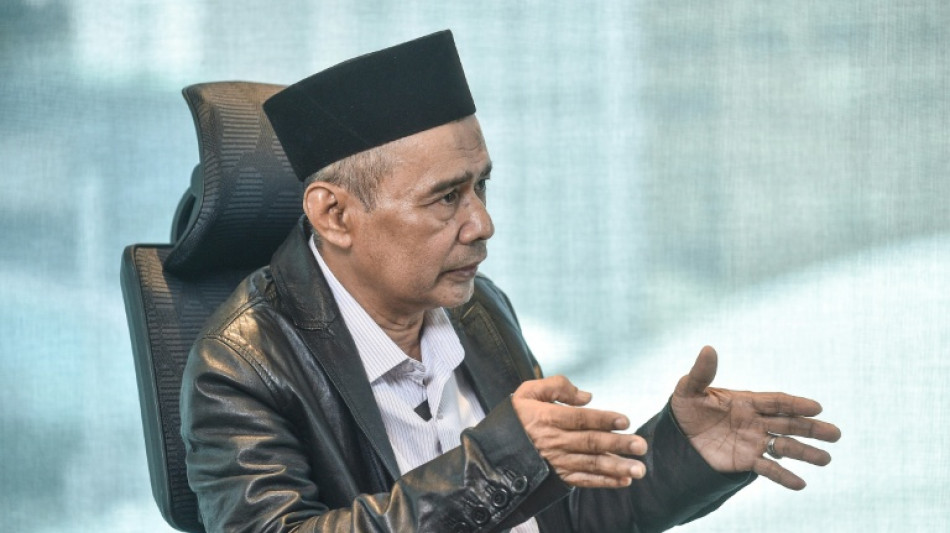
"This struggle will continue until the end of time," Nikmatullah Seri, the spokesman for the Barisan Revolusi Nasional (BRN) peace negotiation delegation, told AFP in a rare interview.
"As long as our objectives remain unachieved, we will continue to fight."
Militants from BRN have fought for an independent Islamic nation in Thailand's Muslim-majority south since the 1960s, although the current unrest began in 2004.
Thailand has been negotiating with the BRN under Malaysian mediation since 2013, the most recent high-level talks taking place in December.
But the process has repeatedly stalled, and Bangkok suspended dialogue in July following an attack that killed five soldiers.
"The objective remains the same, which is the demand for independence," Nikmatullah said in a hotel in the Malaysian capital, Kuala Lumpur.
- Sharia in the south -
The southern region was once part of the former Malay-Muslim Patani sultanate, but was annexed by Buddhist-majority Thailand, then Siam, in the early 1900s.
Since 2004, more than 7,000 people -- militants, Thai security forces and civilians -- have been killed, according to monitor Deep South Watch.
Nikmatullah neither confirmed nor denied the BRN's responsibility for a recent flare in violence, but said it was the "driving force behind a struggle".
He said the group has proposed a power-sharing arrangement with Bangkok, and implied the BRN would take office without elections.
"We want political power. That is, the BRN should be able to govern" over the region, spread across four Thai provinces near the Malaysia border.
It would be administered by sharia police and courts following Islamic law -- although only for Muslims, he said.
There would be a "transitional period of five or 10 years during which we govern", he said.
"After that, we will hand it over to the people to choose democratically."
- Checkpoints, curfews -
Nikmatullah said ethnic Malay Muslims face "obvious discrimination" against their language and culture, and "have never felt safe" -- something Thailand has rejected.
Bangkok's lead negotiator, Thanut Suvarnananda, told local media in August there was "no talk of secession at the negotiating table".
Instead, Thanut -- appointed in April -- said ceasefire zones and reducing checkpoints and other security measures that disrupted daily life were under consideration.
Since 2005, the region has been administered under special security laws allowing Thai authorities to detain suspects without charge and impose curfews, drawing criticism from rights groups.
Nikmatullah said the BRN's military wing recorded 1,000 fighter deaths over the past two decades, but said "warfare was a last resort".
"We do not target vulnerable groups -- our target is the government," said the negotiator, who was born in southern Thailand and joined the BRN aged 18.
Last month, scores of coordinated nighttime attacks injured several people and damaged government property and private businesses.
In July, five Thai soldiers died in a shooting and bomb attack at a checkpoint that also injured six civilians, according to Thai authorities.
Nikmatullah would not say if the BRN was involved: "We are not intelligence agents for the colonisers."
But the soldiers' deaths caused Thailand to put dialogue "on hold", the foreign ministry told AFP, while stressing it remained committed to the process.
In a statement, it said it was focused on a three-pronged approach to the south, "namely socio-economic development, maintenance of security and peace dialogue".
- Back-channel talks -
Wearing a black leather jacket and songkok, a traditional black cap worn by Muslim men, he was vague about where he lives.
But he claimed the BRN has the support of local people and was funded by member donations.
Weapons were taken from its "enemies", he said.
"We take them for free, because they've come here and are wreaking havoc on our land."
Nikmatullah said the peace talks had been hampered by the absence of a Malaysian mediator, but said the BRN could potentially go to "back-channel negotiations" with Thailand in October.
In a statement to AFP, Malaysian Defence Minister Mohamed Khaled Nordin said the appointment of a new mediator was "under consideration". He said Kuala Lumpur's priority was a peaceful resolution.
"Malaysia respects Thailand's sovereignty and recognises that matters concerning its citizens are within Thailand's domestic jurisdiction," Mohamed Khaled said.
He declined to apportion blame for the unrest, but said Malaysia would not allow itself "to be used as a refuge or hideout by any party that resorts to violence or rejects the peace process".
Nikmatullah said the BRN was playing the long game.
"This is not a short-lived struggle. It will take a long time."
B.Karagiannis--AN-GR