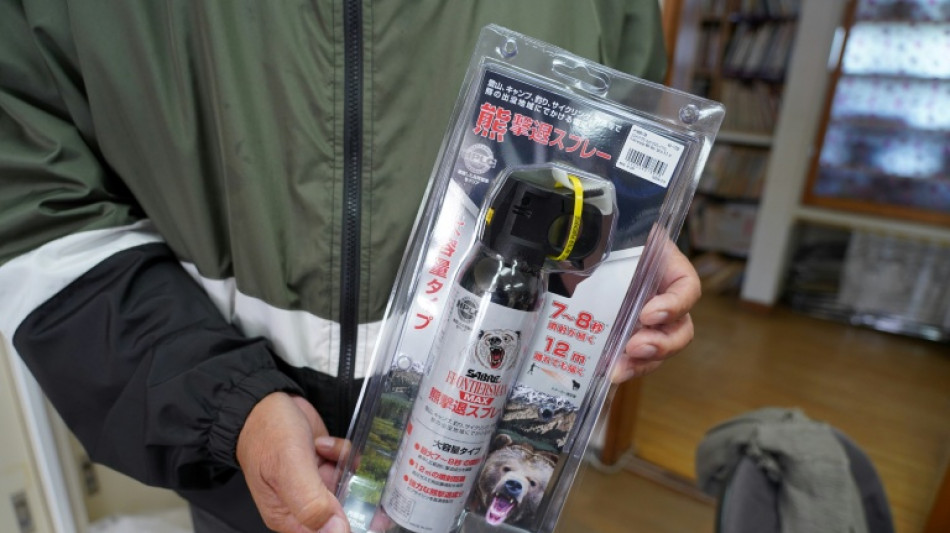
Japan deploys bear cameras in moutains as attacks surge / Photo: Caroline GARDIN - AFP
Japan has begun installing hundreds of cameras in its northern mountains as part of a nationwide survey of the bear population following a surge in maulings, an official told AFP on Thursday.
Bears have killed at least five people since April 1, all in the northern region of Tohoku, after a record 13 fatal attacks across the country in the last fiscal year, according to the environment ministry.
The animals have grown in numbers in recent years, a trend scientists attribute in part to a declining number of people living in rural areas.
Residents in Tohoku live in constant fear, with national media providing daily coverage of bear sightings at shopping arcades, parks and schools.
To draw up an effective response, authorities plan to use more than 800 cameras to monitor the animals, initially targeting six major bear populations in Tohoku before expanding the survey across the country over the next four years, environment ministry official Yu Takahashi told AFP.
Jars of honey mixed with wine placed at about human-head height are meant to attract the bears. The cameras will then capture each animal's unique white chest marks as it stands on its hind legs to sniff the sweet tonic.
"Until now, local governments surveyed bear populations in their jurisdictions at various times and using various methods," Takahashi said.
"Our plan is to conduct a more accurate survey by focusing on population groups," he said.
Meanwhile, a man was arrested on Thursday for obstruction of business, police spokesman Kenji Goto told AFP, after he had accidentally set off anti-bear spray in a post office in Nagoya city.
Five people needed hospital treatment after the incident on Wednesday, reports and officials said.
The 22-year-old Vietnamese national, identified by police as Huynh Nhat Duy, apologised and told officers he had discharged the repellant unintentionally, according to media reports.
- Urban sightings -
In recent months there has been a jump in sightings after the bears emerged from hibernation, and more bears have been straying into urban areas.
This week, authorities said they were investigating a possible sixth fatality after a man's body with bite marks was found in a mountainous area in Tohoku.
Authorities recommend people avoid going alone into the mountains -- which make up some 80 percent of Japan -- and to attach a bell to their bags, and carry bear sprays.
These aerosols, sold in outdoor activity stores, contain capsaicin -- the chemical component in spicy chili peppers -- and cause a burning and irritating sensation.
Bears are also encroaching increasingly into towns and cities in Japan.
In June, dozens of police, hunters and city officials needed four days to trap a bear roaming Utsunomiya, north of Tokyo, forcing mass school closures.
Before that another bear described as "extremely intelligent" -- it opened a window and turned on a tap -- attacked four people at two factories in Fukushima and remained at large for days.
kh-stu-hih-aph/ami
F.Tsakiris--AN-GR


