11 Vehicles Discontinued in Canada for the 2027 Model Year
Eleven vehicles are being discontinued for the 2027 model year in Canada, driven primarily by weak market performance rather than mechanical failure. The list includes the all-electric BMW iX, Cadillac sedans, the Honda Prologue, Acura RDX, Jaguar F-Pace, Lexus LC and LS, Tesla Model S and X, Volvo wagons, and the Volkswagen ID.4.
A significant number of vehicles are being removed from the Canadian market for the 2027 model year, with weak consumer demand emerging as the primary driver behind these decisions. While automotive history contains examples of models ending production due to bankruptcy or regulatory shifts, the current wave of discontinuations reflects a broader industry realignment where specific products have failed to sustain sales volumes.
The all-electric BMW iX is among the notable exits. Despite being a technical achievement with ample range and advanced sensor systems capable of operating in adverse weather, the vehicle has struggled to find a large buyer base. With an average base price exceeding $100,000 across its variants, the iX reached a sales peak of 1,750 units in 2023. However, sales have since dropped by 55 percent. The decline is attributed to BMW’s strong lineup of internal combustion and hybrid crossovers, specifically the X1, X3, and X5 models, which account for approximately 60 percent of the brand’s total sales in Canada.
Cadillac is also retiring its sedan lineup, though the two models are treated differently regarding their future. The Cadillac CT4, a small luxury sports sedan, saw its sales peak at 727 units in its first full year, 2021. By 2024, sales had fallen by 45 percent, and only 205 units were sold in the first three quarters of 2026. The CT4 is disappearing for the 2027 model year due to a lack of interest in small luxury sedans among Canadian buyers. In contrast, the larger Cadillac CT5 will also end production for 2027 but is scheduled to return in either 2028 or 2029.
The Honda Prologue, an all-electric vehicle designed and built by General Motors and sold exclusively in select Canadian regions, has been a marketplace failure. Launched in early 2024 on the platform of the Chevrolet Blazer EV, the Prologue was visually distinct but failed to attract buyers. Since its launch, only 2,064 units have been sold in Canada, a volume that Honda matches with its CR-V compact SUV in just two weeks.
Within the Acura brand, the RDX is also disappearing for the 2027 model year. The discontinuation is due to a generational changeover of the best-selling SUV. This follows last year’s removal of the ZDX, another Honda/Acura electric vehicle related to the Prologue.
Jaguar is undergoing a strategic shift toward an all-electric future positioned further upmarket. To facilitate this, the brand has eliminated all current products, including the XJ and XF sedans, the E-Pace and F-Pace SUVs, and the F-Type sports car. The Jaguar F-Pace, which reached its annual sales peak of 2,612 units in 2017, is being memorialized as the brand transitions. Showrooms will continue to operate under the Land Rover banner, which is currently on track to achieve record sales highs.
Lexus is also making a monumental shift by discontinuing the LS sedan after a 37-year run. The LS was the vehicle that launched the Lexus brand and initially challenged German luxury competitors. However, the market has moved away from full-size luxury sedans toward SUVs like the G-Wagon, Escalade, Range Rover, and Navigator. Toyota Canada sold only 28 LS units in 2025, a sharp decline from the 280 units sold in 2018. Additionally, the Lexus LC grand-tourer is ending production. While some 1,396 LC units have been sold in Canada since 2017, the brand’s reputation for refinement and reliability allows it to cope with the absence of its two-door models.
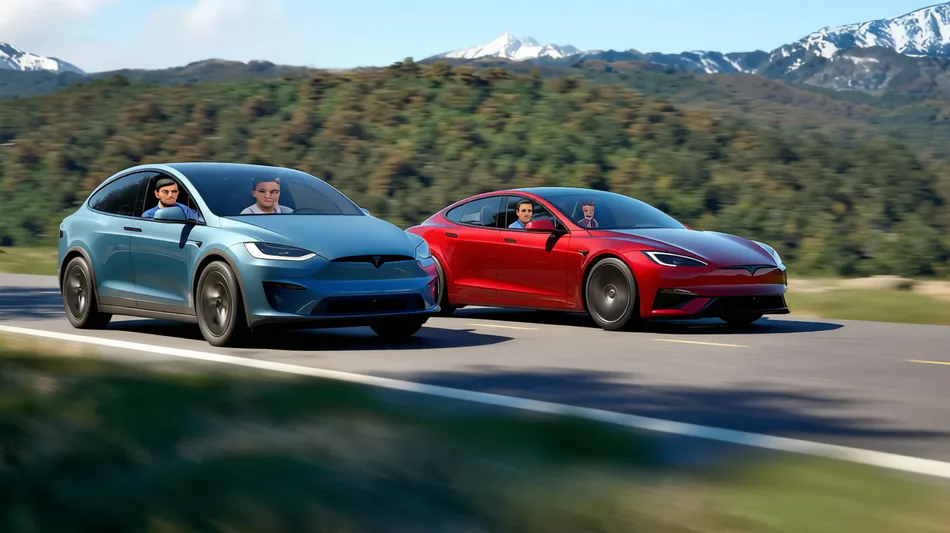
Tesla is discontinuing the Model S and Model X. The Model S originally kicked off Tesla’s presence in the mainstream marketplace, reaching sales of 60,000 units by 2017 after selling around 2,500 original Roadsters between 2008 and 2012. However, both the Model S and Model X are now considered long in the tooth. Tesla generates over 95 percent of its volume from the more affordable Model 3 and the expanding Model Y range.
Volvo is ending its wagon business in Canada with the discontinuation of the V90 Cross Country and V60 Cross Country. While wagons have historically been integral to the brand, from the 240 to the 940, the company’s focus has shifted. Some 96 percent of Volvo’s Canadian volume now comes from utility vehicles. Sales of the wagon lines were already low, with Volvo reporting only 390 sales for the 60 series and 63 for the 90 series in the first nine months of 2025.
The Volkswagen ID.4 has also seen its production end in Canada following the collapse of its sales volume after government incentives expired. The vehicle was moderately successful during the period when federal and provincial electric-vehicle rebates were available. However, after Canada’s iZEV program ended in January 2025, sales plummeted. Second-quarter ID.4 sales fell by 42 percent, followed by a 50 percent drop in the third quarter, 47 percent in the fourth quarter, and another 66 percent decline during the first nine months of 2026. The ID.4 had averaged nearly 6,000 units annually during its first three full years in Canadian showrooms.
O.Karatzas--AN-GR