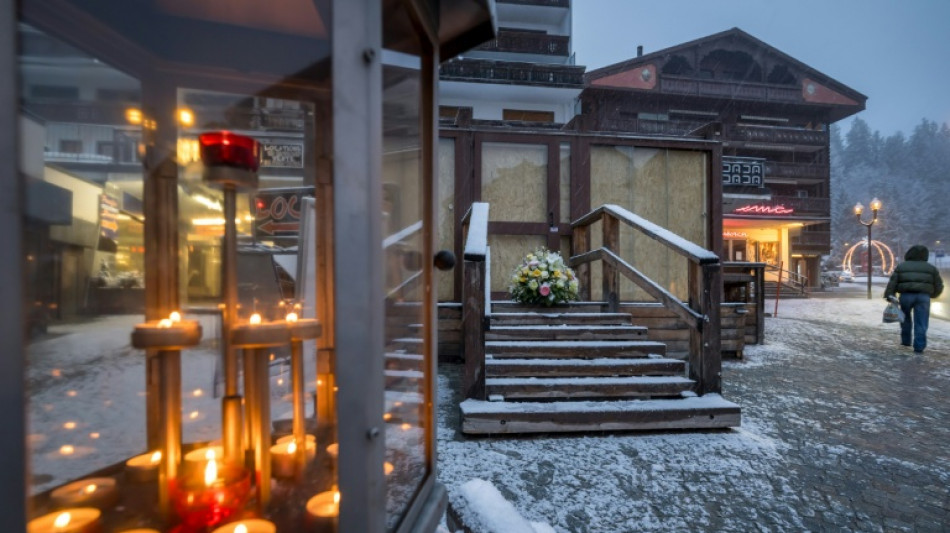
Death toll from Swiss New Year bar fire rises to 41 / Photo: Fabrice COFFRINI - AFP
A teenager injured in the fire that engulfed a Swiss bar during New Year celebrations has died in hospital, taking the death toll to 41, it was announced Sunday.
The death on Saturday was announced a month after the inferno at the ski resort of Crans-Montana. Besides those killed, another 115 were injured, most of whom remain in various hospitals.
"An 18-year-old Swiss national died at a hospital in Zurich on January 31," the Wallis canton's public prosecutor Beatrice Pilloud said in a brief statement.
"The death toll from the fire at Le Constellation bar on January 1, 2026 has now risen to 41."
Pilloud said no further information would be released at this stage by her office, which is investigating the tragedy.
Those killed in the disaster were aged 14 to 39, but the majority were teenagers. Only four were aged over 24.
Among the dead are 23 Swiss nationals, including one French-Swiss dual national, and 18 foreigners.
They include eight French nationals, including a French-British-Israeli girl; six Italian teenagers, including an Italian-Emirati dual national; and one Belgian, one Portuguese, one Romanian and one Turkish national.
Public prosecutors believe the fire started when revellers raised champagne bottles with sparklers attached too close to sound insulation foam on the ceiling of the bar's basement.
Four people are currently under criminal investigation: the bar's co-owners, the Crans-Montana municipality's current head of public safety and a former Crans-Montana fire safety officer.
Following the fire, seriously wounded patients were airlifted to various hospitals and specialist burns units throughout Switzerland and four other European countries.
Switzerland's Federal Office for Civil Protection told AFP on Friday that at its last count, as of Monday, 44 patients were being treated abroad. They included 18 in France, 12 in Italy, eight in Germany and six in Belgium.
The Wallis health ministry told AFP that 37 patients were still in Swiss hospitals, as of Monday.
The picture is constantly changing, with patients moving between hospitals for different stages of their treatment, and some patients being readmitted. Some remain in intensive care.
I.Athanasiou--AN-GR