Brazilian voters the latest to eye Bukele security model with envy / Photo: Pablo PORCIUNCULA - AFP
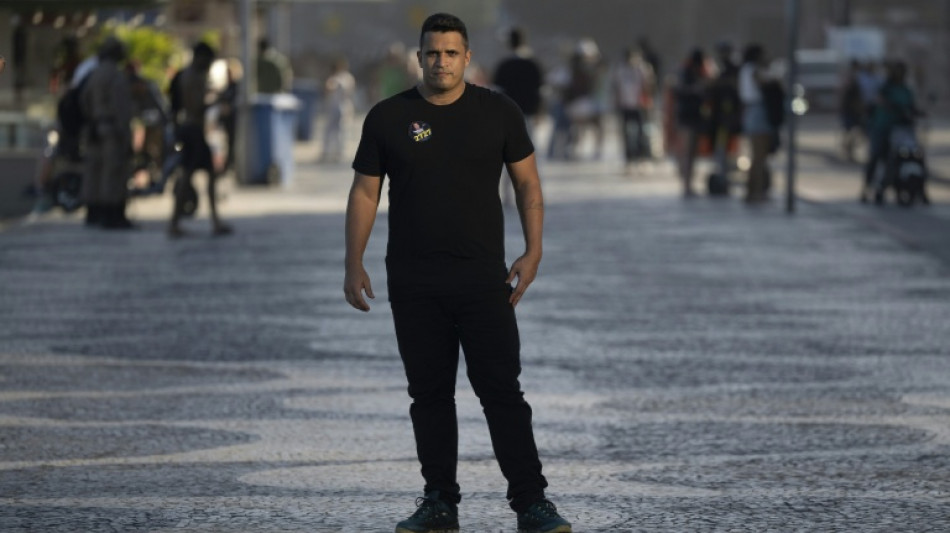
Fed up with witnessing muggings in Rio de Janeiro's Copacabana neighborhood, William Correia formed a volunteer group to patrol the streets and report robberies on social media.
He dreams of Brazil adopting El Salvador President Nayib Bukele's hardline approach to crime.
"I'd like to see here what is happening in El Salvador, so criminals get a reality check," the 39-year-old martial arts instructor told AFP.
Crime and insecurity are the biggest concerns among Brazilian voters ahead of October 4 elections, and right-wing candidate Flavio Bolsonaro has tapped into these fears, vowing to import the Salvadoran model.
Bukele's formula, which has sharply reduced violence under a controversial state of emergency, became a key campaign theme for right-wing politicians who won elections across Latin America, including Ecuador's Daniel Noboa, Colombia's Abelardo de la Espriella and Keiko Fujimori in Peru.
In Brazil, organized crime groups such as Comando Vermelho and Primeiro Comando da Capital (PCC) impose their rule over millions of people living in favelas, while street crime in the form of cellphone, handbag and car theft is rampant.
Against that backdrop, 88 percent of Brazilians favor tougher sentences for criminals and 79 percent support lowering the age of criminal responsibility, according to recent polls.
- 'Inspiring' -
Bukele has brought down gang violence through mass arrests and imprisonment, drawing criticism from rights groups over arbitrary detentions, torture and deaths in custody.
Despite questions over his methods, Bukele is now the most popular leader in Latin America, according to a recent regional poll.
Flavio Bolsonaro, the son of jailed far-right former president Jair Bolsonaro, said El Salvador's turnaround on violence was "inspiring."
Among other measures, he has pledged to build maximum-security mega-prisons and designate the Comando Vermelho and PCC criminal factions as terrorist organizations, as US President Donald Trump's administration did recently.
Leftist President Luiz Inacio Lula da Silva, who is seeking reelection and whose rivals accuse him of being soft on crime, has steered clear of such rhetoric.
His main strategy is what he calls "financial suffocation" -- choking off the assets and businesses criminal factions use to launder money.
- 'Brazilian law protects criminals' -
Correia, who was barred by a court in May from organizing patrols, believes human rights violations are an unavoidable price to pay.
"It's like cancer. Chemotherapy is bad for the body, but it works against the disease. Faced with this absurd violence, we need chemotherapy" for criminals, said Correia, who is now running for a seat in the Chamber of Deputies for a center-right party.
Taxi driver Wallace Ferreira, 53, says "Brazilian law protects criminals, not law-abiding citizens" and complains that suspects are quickly released after being arrested.
Ferreira stopped working nights out of fear after a colleague was robbed by a passenger who lured him into an ambush.
- 'Many mothers will cry' -
Others, like Sonia Bonfim Vicente, warn of the consequences of a hardline approach, pointing to alleged police impunity that already exists and has claimed innocent lives.
In 2018, a police officer shot and wounded her five-year-old daughter during an operation in the Chapadao favela, where they live.
She said that three years later, police killed her husband and 17-year-old son Samuel during another operation, accusing them of being armed.
She is still seeking to prove that allegation false in an ongoing court case.
"Brazil will become a bloodbath" if it adopts the Bukele model, Bonfim, 41, told AFP.
"If security forces are allowed to act with greater impunity, it will only make things worse. Many mothers will cry, many children will die," said the hairdresser, who now works for an association supporting other mothers in similar situations.
Political scientist Robert Muggah of the Igarape Institute, which specializes in security, said the Bukele model could "weaken democratic safeguards without achieving the dramatic reduction in violence seen in El Salvador."
"Brazil's criminal landscape is more complex," he said.
Salvadoran gangs built their power on territorial control and extortion, whereas Comando Vermelho and PCC have expanded into dozens of countries, with their money flowing through legitimate businesses and financial networks, he said.
With less than three weeks before elections, Lula and Bolsonaro are neck-and-neck in polls.
G.Makropoulos--AN-GR