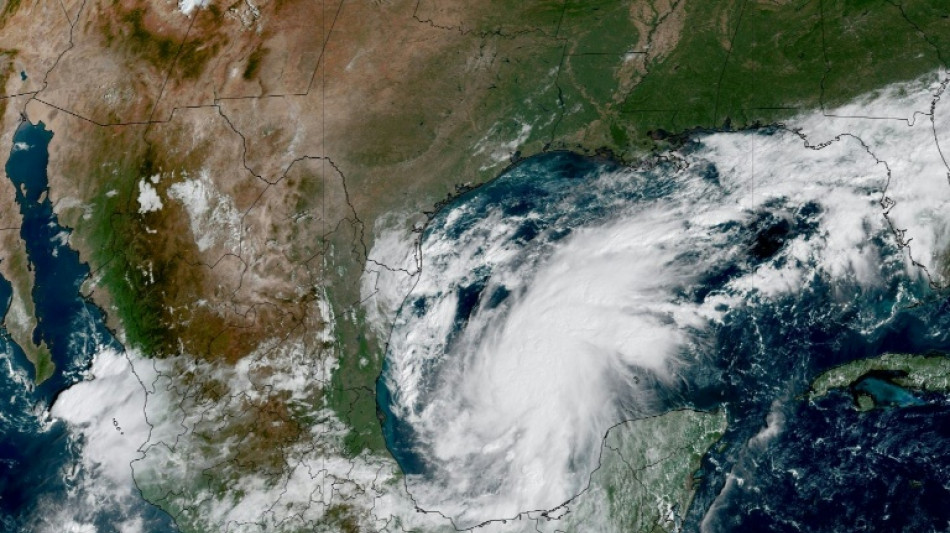
Hurricane Isaias strengthens en route to US Gulf Coast / Photo: Handout - CIRA/CSU/AFP
Isaias strengthened to a Category 2 hurricane on Thursday as it headed toward the US Gulf Coast, the US National Hurricane Center said, prompting mandatory evacuations and disrupting oil and gas production.
The first hurricane of the Atlantic season, Isaias is forecast to make landfall in Florida, Alabama or Mississippi on Friday night or early Saturday, according to the NHC.
Isaias comes unusually late in the season, which began on June 1, partly due to a strong El Nino weather phenomenon.
El Nino causes strong vertical wind shear, dry air and sinking air over the Atlantic Ocean, hampering storm formation and intensification in the area.
Mandatory evacuation orders have been issued for coastal areas in four counties in Florida, while states of emergency are in place in parts of Alabama, Florida and Georgia.
Isaias, which was about 230 miles (370 km) south of the Mississippi River delta, was packing maximum sustained winds of 105 mph (165 kph), making it a Category 2 hurricane on the Saffir-Simpson scale.
A hurricane warning was in effect from Ocean Springs, Mississippi, to the Gulf County Line in Florida, the NHC said in its latest update.
A storm surge warning, which brings the danger of "life-threatening inundation," was in effect for the mouth of the Mississippi River to the Suwannee River, it said.
The NHC warned residents in the likely impact zone that emergency preparations to protect lives and property from high winds and storm surges "should be rushed to completion."
Two airports in northwestern Florida were scheduled to suspend operations.
Isaias has disrupted oil and gas production in the Gulf of Mexico, as platforms and rigs were evacuated.
As of Thursday, about 63 percent of the oil production in the region had been temporarily suspended, taking nearly 1.3 million barrels a day off the market, according to the Marine Minerals Administration (MMA).
About 57 percent of gas production had been suspended, the MMA said.
El Nino is the warming phase of a natural cycle in the tropical Pacific known as the El Nino-Southern Oscillation, and comes along every two to seven years.
In the Pacific, El Nino's effect on the atmosphere leaves little vertical wind shear over the Pacific, creating favorable conditions for hurricanes to intensify.
The Pacific has already seen several hurricanes, including Polo, which at one point reached level 5 in strength.
P.Skoulas--AN-GR