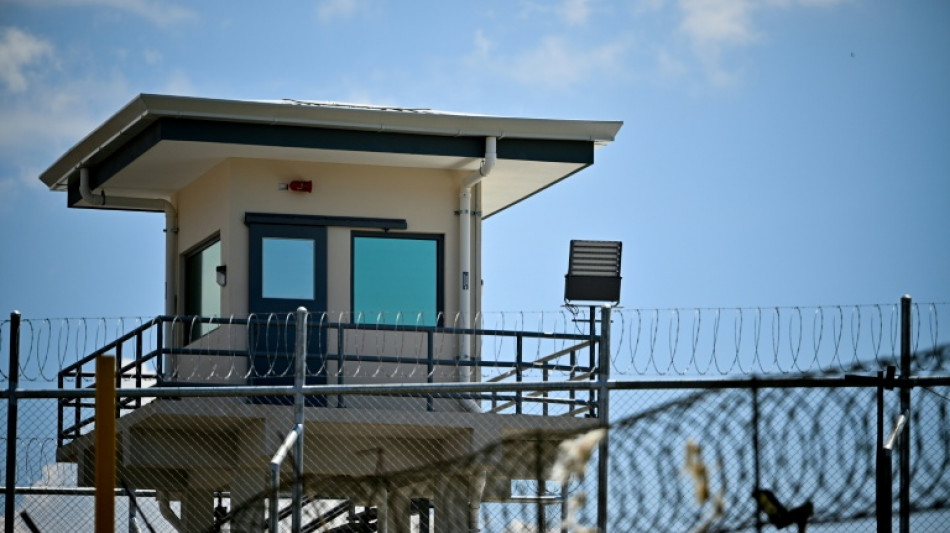
Costa Rica opens jail inspired by El Salvador mega-prison / Photo: Ezequiel BECERRA - AFP
Costa Rica opened a high-security jail on Wednesday inspired by a mega-prison in El Salvador that has become a symbol of the country's war on gangs, widely criticized by human rights groups.
Costa Rican President Laura Fernandez, who took office in May, campaigned on a promise to crack down on the wave of crime sweeping what was once Central America's safest country.
In a vast corridor with rows of cells, the right-wing leader and ally of US President Donald Trump vowed to "take a hard line" on crime, saying "those who break the law must pay the price."
The High Security Center against Organized Crime (Cacco) in San Rafael de Alajuela will receive its first prisoners this month and eventually house 5,100 inmates.
They will wear orange jumpsuits, be subject to strict visitation rules and have the right to one hour per day outdoors.
Fernandez has cited iron-fisted Salvadoran President Nayib Bukele, who has locked up thousands of suspected gang members without charges, as an inspiration on how to reduce crime.
Her election marked another win for the Latin American right, which has unseated a host of left-wing administrations in recent months, including in Chile, Bolivia and Honduras.
"To the sister Republic of El Salvador, which has played a vital role in our fight against crime, dear President Bukele, I send you a huge, heartfelt hug," Fernandez told reporters at the inauguration.
She thanked Bukele for his support "so that this project could become a reality today".
Fernandez will travel to El Salvador on Friday to visit the notorious Center for Terrorism Confinement (CECOT), where NGOs have denounced widespread human rights violations, including torture and sexual violence.
Critics have accused Costa Rica, long seen as an oasis of democracy and respect for human rights in Central America, of imitating El Salvador's crackdown.
More than 90,000 suspected gang members have been arrested in El Salvador since Bukele declared a state of emergency in 2022.
Salvadoran NGO Socorro Juridico says more than 500 of them have died in detention.
U.Papamichail--AN-GR