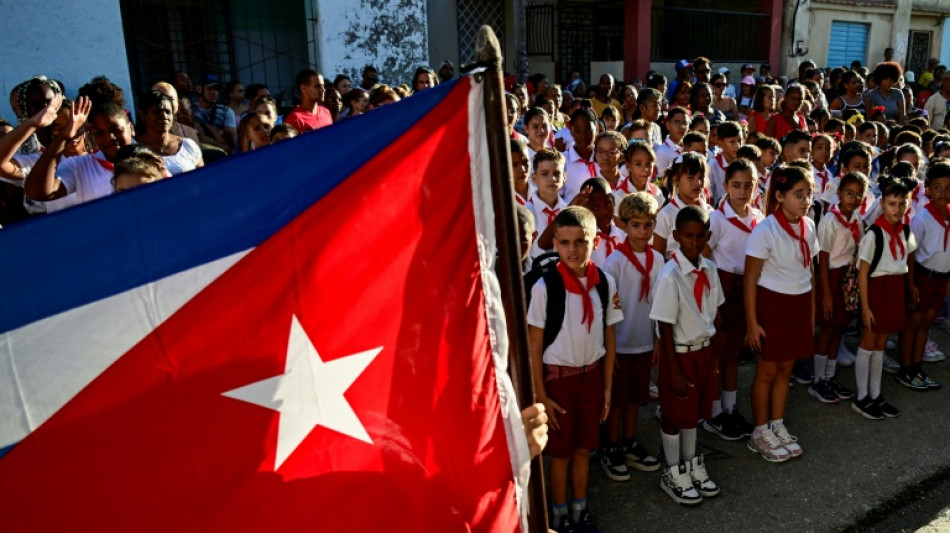
Back-to-school in Cuba a grim day with shortages of everything / Photo: YAMIL LAGE - AFP
Cuban children began the new school year Tuesday with shortages of teachers, food and uniforms -- and often no electricity -- as the island endures a crippling US pressure campaign.
At the Maria Cabrales Elementary School in the Havana area, kids filed into class without the typical bell-ringing or music to welcome them. The neighborhood had not had electricity for 28 hours.
For 35-year-old hair dresser Yannay Miranda, like many of the parents of Cuba's 1.4 million pupils, the challenges of getting ready for the new year began long before Tuesday.
She had to find a uniform for her six-year-old daughter, arrange food for her, and prepare for the now-routine blackouts.
The uniform in particular was difficult. The government has struggled to provide them, forcing parents to turn to private suppliers.
The uniforms cost the equivalent of between two to five US dollars, a high price in the inflation-plagued country, where the average monthly salary is $10.
Cuba for decades took great pride in its state-run, free and universal education system.
"Now the schools depend on households, on the parents," said Miranda.
School lunches, cleaning supplies and other needs associated with a lack of running water are up to parents to deal with.
The country's deep energy crisis has forced the education ministry to be more flexible about school hours and uniforms.
While the island struggled for years, the situation has drastically worsened since January, when the United States ousted Cuba's close ally, Venezuelan leader Nicolas Maduro, and halted petroleum shipments to the island.
Washington also began ramping up sanctions, causing an exodus of foreign investors.
The list of today's woes goes on: Cuban roads and other infrastructure are in a decrepit state, no gasoline means no school buses, and there is a shortage of teachers. The pay is so low that many seek work elsewhere, or have joined an exodus of people trying to leave the island altogether.
- Waking up to no electricity' -
The government says it failed to cover 25 percent of the teaching positions this year, with a particularly bad shortage in Havana. As many as 300 teachers from other provinces have transferred to the capital.
Last year was bad, too. Blackouts and fuel shortages meant lots of pupils attended class remotely and the school year ended early.
But the situation has significantly worsened, with blackouts lasting as long as 30 hours in Havana and even days on end in other provinces.
At the Maria Cabrales school, principal Regla Maria Perera, 64, said there is an art to running a school that has no electricity and is not blessed with good natural light.
"We will try out alternatives as we go along," she said. Another trick when daylight is precious is to concentrate on the most basic school subjects, Perera said.
- 'Suffocate' Cuba -
Parents are visibly worried about their children.
"It really is difficult," said Kasumy Chiu, 47, whose 10-year-old son is starting fourth grade.
"Today we woke up to no electricity. A lot of food spoils, but as long as they have the opportunity to learn, we make sacrifices," said Chiu.
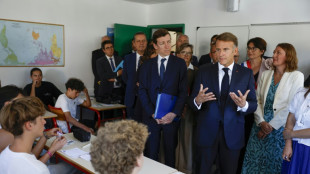
As she opened the school year Tuesday, Education Minister Naima Trujillo took aim at the US energy blockade but insisted "education in Cuba is sacred."
President Miguel Diaz-Canel took part in the ceremony and later said on X that the United States is trying to "suffocate" the island.
V.Tsitsipas--AN-GR