Georgia refrigeration company sues EPA after five-year HFC reprieve
Alta Refrigeration is challenging the EPA in court, arguing that a five-year delay in federal limits on high-warming refrigerants should have been made permanent.
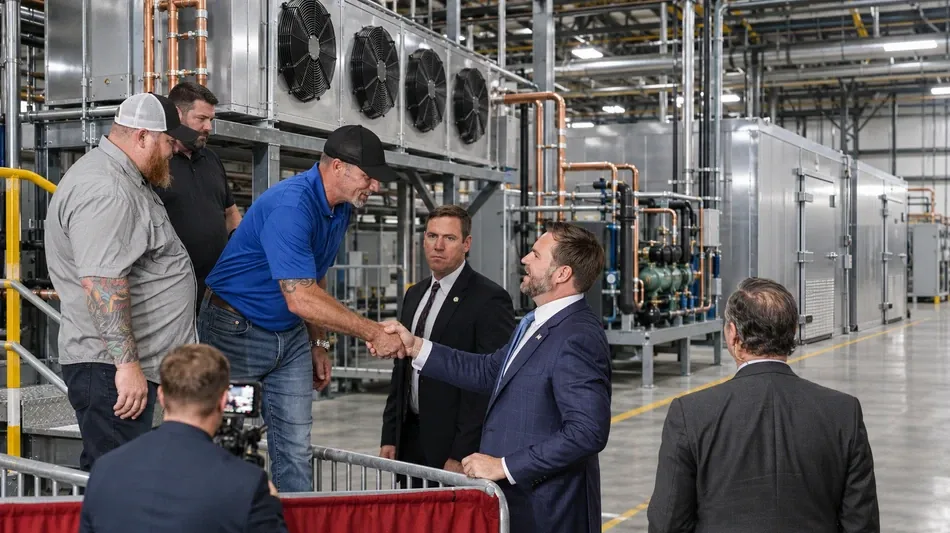
Georgia-based Alta Refrigeration and the Coalition for the Use of Safe and Efficient Refrigerants have sued the Environmental Protection Agency and Administrator Lee Zeldin, arguing that a recent rollback of greenhouse-gas rules did not go far enough. Alta President Eric Brown also chairs the coalition. Vice President JD Vance and Zeldin visited the cold-storage equipment manufacturer in August 2025 to announce plans to ease regulations opposed by the company. In May 2026, the EPA extended deadlines and gave manufacturers five additional years to sell equipment using hydrofluorocarbon refrigerants with high global-warming potential. Alta is seeking a permanent exemption rather than the temporary reprieve.
The dispute arises from the American Innovation and Manufacturing Act of 2020, bipartisan legislation signed by President Donald Trump during his first term. It requires a gradual reduction in hydrofluorocarbons, chemicals that can trap hundreds or thousands of times more heat than carbon dioxide on a pound-for-pound basis. National industry groups supported the law and the Kigali Amendment because they expected the transition to increase US manufacturing and exports. The EPA adopted a technology-transition rule in 2023 to implement the phasedown. When the agency revised that rule in May, it said longer compliance periods would help manufacturers and reduce costs for consumers. Alta and its coalition had first petitioned for a permanent exemption and later turned to the courts after the agency offered only more time.
In a September filing with the US Court of Appeals for the District of Columbia Circuit, Alta said Zeldin had stated that he intended to give the company what it requested. A declaration from Brown included screenshots of an exchange described as involving Zeldin and a member of Georgia’s congressional delegation. The messages appeared to say that Congress would have to act for the exemption to become permanent. The screenshots identified the lawmaker as "Rep Buddy C.," a reference that may point to Republican Representative Earl "Buddy" Carter of Georgia. Carter and Zeldin served together in the House and co-sponsored legislation. The EPA and Carter’s office declined to comment because of the pending case, and Alta also declined to comment.
Brown said in his declaration that, through a Georgia lawmaker, the EPA directed him to withdraw comments submitted to the White House Office of Management and Budget and that he acted under duress. Joseph Goffman, who led the EPA air office during the Biden administration and is not involved in the litigation, said he had never encountered such a request from OMB. Other litigants are challenging the same EPA action from the opposite direction. Trade associations representing more than 90 percent of North American residential and commercial heating, ventilation, air-conditioning and refrigeration equipment, as well as over 60,000 plumbing and HVAC professionals, contend that the agency weakened the rule without an adequate explanation.
Almost two dozen state attorneys general and the Natural Resources Defense Council have also joined legal challenges. Those groups say American businesses invested heavily in lower-emission technology and that the 2026 revision disrupted the transition. NRDC attorney David Doniger said the change would damage the environment and economy while conflicting with the position of most of the industry. The litigation therefore places Alta’s demand for a permanent exclusion alongside claims that the EPA already relaxed the requirements too much. It also exposes tensions between the Trump administration’s deregulation effort and companies seeking broader relief than the agency believes it can grant without new legislation.
S.Kyriakou--AN-GR