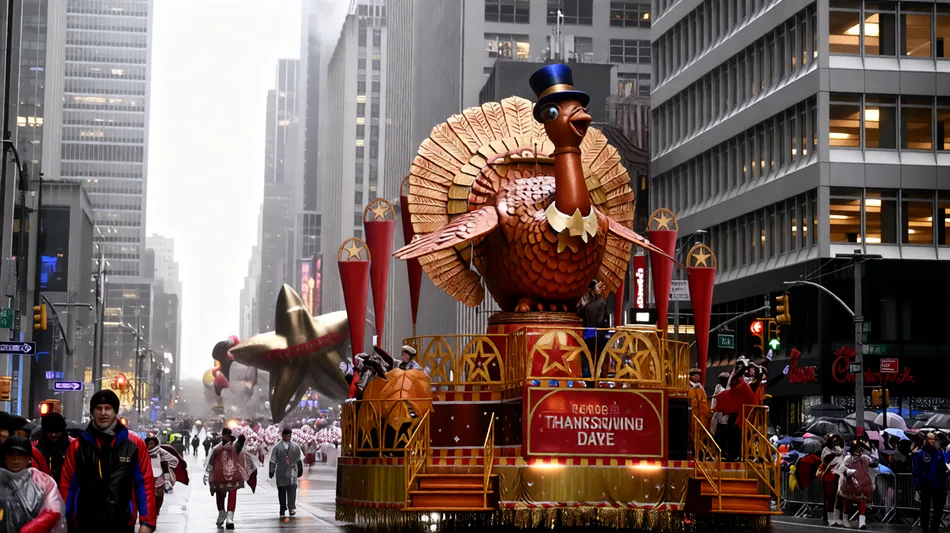
The Historical Origins of Thanksgiving: From Pilgrims to National Holiday
The origins of Thanksgiving are rooted in historical events rather than myth. While popular lore often centers on the 1621 gathering of Pilgrims and Wampanoag people, the holiday’s official status evolved over decades, marked by George Washington’s 1789 proclamation and later campaigns by Sarah Josepha Hale to standardize the celebration.
The Merriam-Webster dictionary defines Thanksgiving as a national holiday of divine favor celebrated on the fourth Thursday of November, while Roget’s Thesaurus describes it as an acknowledgment of thanks and praise. However, the historical reality of the holiday’s inception differs significantly from popular cultural narratives.
Contrary to widespread belief, the Pilgrims, who were Separatists, did not land at Plymouth Rock. Historical records indicate they first arrived in Provincetown before sailing around Cape Cod to settle in Plymouth. Furthermore, the menu at their 1621 harvest feast likely did not include turkey. Contemporary accounts suggest the meal consisted of venison, goose, and duck, as the Separatists would have relied on local game rather than poultry.
The path to Thanksgiving becoming a national institution was gradual. It was not until 1789 that George Washington issued a proclamation declaring a day of public thanksgiving. At that time, turkey had become a common feature of such celebrations. The bird’s cultural significance was further cemented by Benjamin Franklin, who reportedly advocated for the turkey as a patriotic symbol for the United States.
Washington’s personal life also intersected with the holiday’s early history. His mother, Mary Ball Washington, opposed his involvement in the American Revolution and refused to attend his presidential inauguration. During his presidency, Washington governed from New York, as the White House had not yet been built.
Despite these early proclamations, Thanksgiving remained an irregular observance rather than a fixed national holiday for many years. The standardization of the celebration is largely attributed to Sarah Josepha Hale, the author of "Mary Had a Little Lamb." Hale campaigned extensively to establish Thanksgiving as a unified national tradition, successfully promoting the turkey as the centerpiece of the holiday meal.
Modern celebrations often blend historical reverence with contemporary customs. While the holiday is officially defined by gratitude and divine favor, it also encompasses complex family dynamics and culinary traditions. Public figures have noted varying preferences for holiday meals; actress Uma Thurman has mentioned focusing on preparing dishes rather than cooking everything from scratch, while Lorraine Bracco has expressed a preference for pastrami and eggs over traditional turkey. Others, such as Amy Irving, have adopted specific recipes like turkey loaf based on family recommendations.
The symbolism of the turkey remains central to American identity, despite geographical misconceptions. The bird is native to the United States, not Turkey, a distinction that highlights the unique cultural development of the holiday within the American context.
D.Nikolaou--AN-GR